Airbnb Host Tips: What Actually Drives More Bookings
The most impactful Airbnb host improvements are not random tweaks — they follow a consistent pattern. Your cover photo determines whether a guest clicks before reading a single word of your title. Your amenity set determines whether a guest books you or the listing down the road. Your rating sub-scores tell you exactly where guest expectations went unmet. Selah’s analysis of STR listings across markets shows the same five areas account for the majority of the performance gap between average and top-earning hosts: first impressions, pricing, photo storytelling, amenity curation, and guest experience. What follows is a prioritized breakdown of each area — ordered by impact, not effort.
Last updated:
Want to know which of these areas is holding your listing back most?
Get your listing diagnosis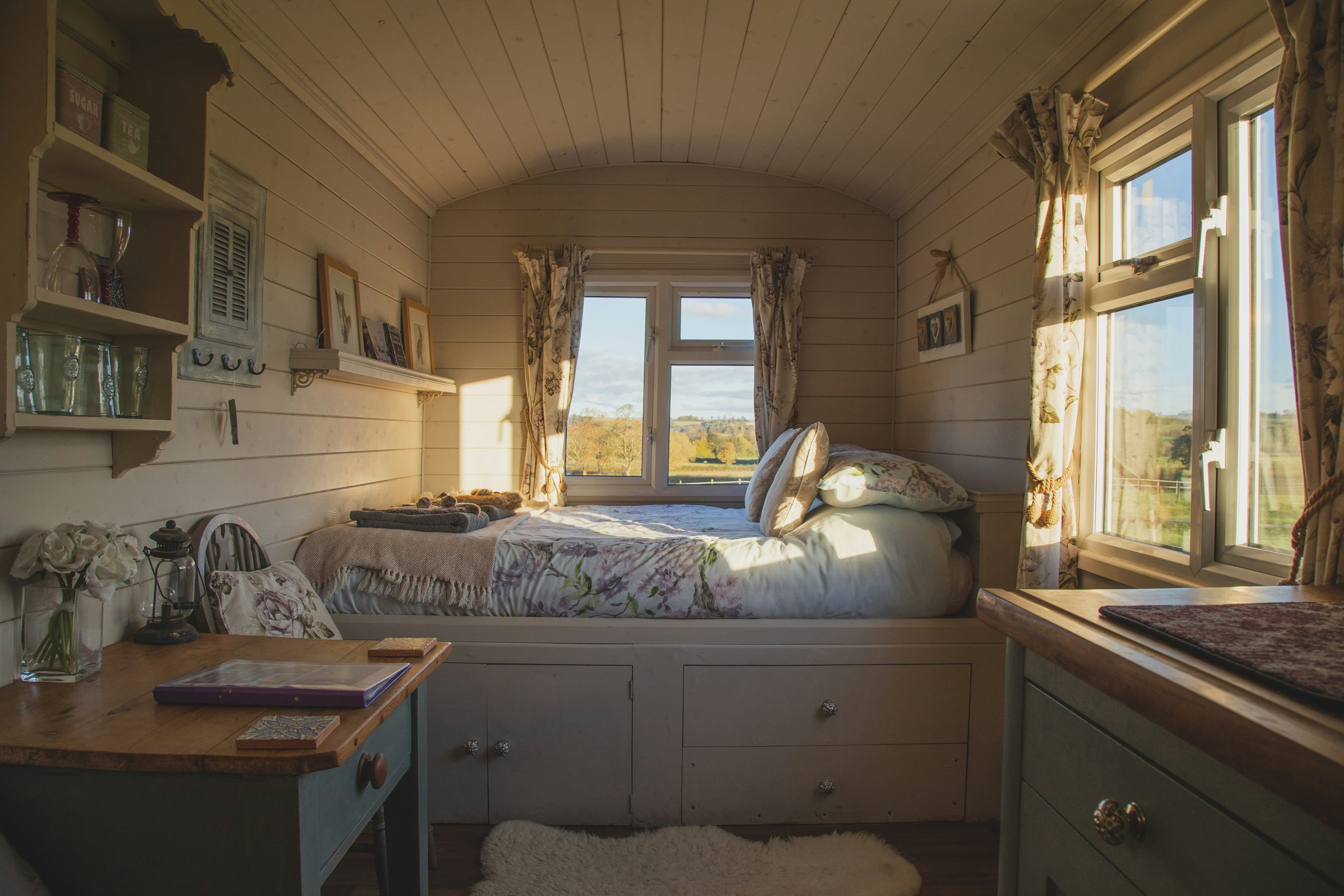
First Impressions: Your Cover Photo and Title
Guests form a click-through decision from your first three photos before they read your title. A weak gallery sequence is a conversion problem, not an aesthetic one. Your cover photo needs to show the most distinctive space in your property — not the most attractive room from your perspective, but the one a guest would most want to spend time in.
The most common cover photo errors Selah identifies across listings: shooting too wide (the room looks empty and impersonal), shooting at night without adequate warm lighting (the photo reads dark and uninviting), and leading with an exterior when the interior is the stronger selling point. A well-lit, styled bedroom or living area with natural light almost always outperforms an exterior in click-through — the guest is buying an experience, not a building.
Your title works alongside the cover photo, not independently of it. The 50-character limit forces precision. “3BR Nashville Home” competes with dozens of identical titles. “Restored Craftsman with Steam Shower” names something specific a guest can remember. Selah’s analysis across STR markets shows that titles naming a standout feature or feeling see measurably higher click-through than descriptive titles at the same price point.
Cover Photo Checklist
- ✓Taken during the day with natural light as the primary source
- ✓Shows the most distinctive or emotionally resonant space in the property
- ✓No clutter visible — surfaces cleared, bed made, cushions straightened
- ✓Wide enough to show the room's proportions, close enough to feel warm
- ✓Consistent white balance — no yellow cast from mixed light sources
Photo order matters as much as individual photo quality — a strong cover photo followed by a weak second image loses guests at the scroll.
Airbnb Photo Order Guide →Pricing and Revenue: Where Most Hosts Leave Money Behind
Pricing misaligned with your local market is typically the fastest occupancy increase available — without touching your listing content. The most common pattern Selah identifies: hosts price below the market midpoint despite strong occupancy, which means they’re filling nights but leaving revenue behind on every booking.
The correct pricing benchmark is not Airbnb’s suggested range — it’s the actual average nightly rate of the top 25% of earners among comparable properties in your market. That’s the rate your listing can likely reach with the right improvements in place. If you’re running 70%+ occupancy at a rate below the market midpoint, you’re almost certainly underpriced.
Adjust for demand seasonality, not calendar seasons
Most markets have 2–3 high-demand windows that don't align cleanly with summer/winter. In Selah's analysis, hosts who price into those windows rather than using a flat annual rate consistently see 15–25% higher annual revenue than comparable listings at similar base prices.
Set minimum weekend rates separately from weeknight rates
Friday and Saturday nights in most markets see 20–35% higher demand than midweek. A flat nightly rate leaves that premium on the table. Most dynamic pricing tools handle this automatically — if you're pricing manually, the weekend uplift alone is typically worth 10–15% of annual revenue.
Build cleaning fees into your pricing strategy
High cleaning fees relative to nightly rate suppress short-stay bookings, which carry the highest revenue-per-night. A $150 cleaning fee on a $120/night listing discourages the 2-night weekend booking that guests compare against hotels. The fix is usually to raise the nightly rate and reduce the cleaning fee — total revenue per booking stays similar, but you attract more short stays.
Photo Storytelling: How Your Gallery Converts Interest Into Bookings
A gallery that tells a coherent story — moving from the entry to the main living space to bedrooms to bathrooms to outdoor areas — converts better than the same photos in random order. Guests build a mental map of the property as they scroll. Gaps in that map (no bathroom photos, no outdoor photos when you have outdoor space) create doubt that kills bookings.
The most common gallery gaps Selah identifies: missing bathroom photos (guests care about cleanliness signals and shower quality more than most hosts realize), missing outdoor space photos even when outdoor areas are an amenity, and bedroom staging that shows a bare room rather than one styled to feel like a retreat. Each missing category is a conversion question the guest answers with doubt rather than confidence.
Within each room, the styling details visible in photos carry weight. A bed with layered pillows and a folded throw reads as intentional. A bed with a single flat duvet reads as functional. Guests making a $200+ nightly rate decision are looking for evidence of care — the photos are the primary evidence available to them before they book.
If your listing isn’t getting views despite a competitive price, the gap is often in how the gallery is presenting the space.
Why Your Listing Gets No Views →Amenity Curation: Closing the Gap Against Top Earners
The amenity gap between a typical Airbnb listing and the top-earning properties nearby is rarely a complete overhaul. Selah’s analysis across STR markets shows the gap is usually 3–5 specific items that the majority of top earners have and the average listing does not. Identifying and closing those specific gaps — not adding everything possible — is what moves the needle.
Fast, reliable WiFi with documented speed
Consistently high impactWiFi listed as '100+ Mbps' with a speed test screenshot in the listing photos consistently attracts remote workers and longer stays. Monthly revenue per available night is typically higher for listings that document WiFi speed — remote workers book longer stays at better rates and have lower friction around checkout flexibility.
Self check-in
Consistently high impactSelf check-in with a smart lock removes friction from the booking decision for guests who travel on irregular schedules. Listings without it lose the subset of guests who specifically filter for it, and it narrows your appeal to guests who need to coordinate with your availability at arrival.
Dedicated workspace
Market-dependentA desk, chair, and good lighting — photographed together as a workspace — signals to remote workers and business travelers that the property was designed with their stay in mind. In most markets, this segment books at higher average nightly rates and leaves more detailed, positive reviews than leisure travelers.
Quality coffee setup
Often overlookedA visible coffee station with quality beans (not just a drip machine with generic pods) is mentioned in guest reviews at a rate disproportionate to its cost. It signals hospitality — that someone thought about what a guest wants in the first ten minutes of waking up. A $50 investment in a French press and good beans is one of the highest-return hospitality additions available.
The right amenity additions for your specific listing depend on what your nearby top earners actually have — not generic best-practice lists. A Selah audit identifies the specific gaps between your listing and the top earners in your market, ranked by revenue impact.
Guest Experience: What Ratings Actually Measure
Airbnb’s overall star rating is an average of six sub-scores: cleanliness, accuracy, check-in, communication, location, and value. When your overall rating is 4.7 or below, the gap is almost always traceable to one or two of these sub-scores pulling down the average. Identifying which ones — and why — is faster than trying to improve everything at once.
Cleanliness (the most common gap)
A sub-score below 4.8 here almost always points to a detail problem — not a systemic cleaning failure. Hair in a shower drain, a stovetop that wasn't fully wiped down, a bathroom mirror with streaks. A photo-verification cleaning checklist resolves most of these without changing cleaners or frequency.
Accuracy (the gap guests don't mention directly)
When guests give 4 stars for accuracy, it means something in the listing set an expectation that reality didn't match. This is often a photo-to-reality gap (the room looks more spacious in photos), an amenity listed that doesn't work well (slow WiFi listed as 'fast'), or a key detail omitted (parking that requires a fee). A quarterly accuracy review — comparing your listing to the current state of the property — is the fix.
Value (a pricing and expectation signal)
A low value score means guests paid more than the experience felt worth. This can mean the price is too high for the amenity and design level — or it can mean the experience is genuinely worth more than guests expected to pay, and the listing isn't communicating that clearly enough before they book. Both situations require different responses.
The most underused guest experience tool is the mid-stay check-in message. Sent around day 2 of a multi-night stay, a brief “Is everything comfortable?” message surfaces issues while you can still address them. A resolved complaint almost never becomes a 4-star review. An unresolved one almost always does.
Strong guest experience and Superhost status reinforce each other — the criteria overlap directly with what drives ratings.
Airbnb Superhost Guide →About This Guide
This guide is written by Selah Collective, a short-term rental consultancy that audits and improves Airbnb listings for hosts. Performance patterns referenced here are based on Selah’s analysis of STR listing data across markets. Revenue and occupancy figures represent observed patterns among comparable listings, not guaranteed outcomes. Selah is not affiliated with Airbnb.
Which Area Is Limiting Your Listing Most?
The Selah Score™ audit benchmarks your listing across all five performance areas — cover photo, pricing, gallery storytelling, amenities, and guest experience — against the actual top earners in your specific market. You get a scored breakdown and a prioritized action plan.
Frequently Asked Questions
What is the single most important thing an Airbnb host can do to increase bookings?
Your cover photo is the single highest-impact change available to most hosts. Guests form a click-through decision from the first image before reading your title. A cover photo that clearly shows the most distinctive space — well-lit, professionally styled, taken from a flattering angle — consistently outperforms a cluttered or poorly lit alternative. Selah's analysis of STR listings shows hosts who upgrade their cover photo typically see click-through increases of 20–40% in competitive markets.
How do I improve my Airbnb rating?
Airbnb ratings improve fastest by closing the gap between what guests expect and what they find. The most common sources of 4-star reviews are listing accuracy gaps (something in the description did not match reality), cleanliness shortfalls (usually a detail, not a systemic problem), and slow communication after check-in. A brief mid-stay check-in message on multi-night stays surfaces issues before they become reviews.
How often should I update my Airbnb listing?
Update your listing at minimum four times a year, timed to seasonal demand shifts. Your title, cover photo, and opening description should reflect what guests are searching for in each season — a listing that leads with a fire pit and fall foliage access in October outperforms a generic year-round description. The Selah Score™ audit includes four ready-to-use seasonal titles so you know exactly what to swap in each quarter. Airbnb also rewards recently updated listings with a freshness signal in its search algorithm.
What amenities should every Airbnb have?
The amenities that most consistently separate higher-earning listings from comparable lower-earners are fast WiFi (100+ Mbps), a dedicated workspace, self check-in, a quality coffee setup, and at least basic outdoor access. The specific gaps vary by market — Selah's analysis across STR markets shows the amenity gap between a listing and its top-earning nearby competitors is usually 3–5 items, not a complete overhaul.
Does the Airbnb listing title really matter?
Yes. Your title is the first piece of text a guest reads after your cover photo, and Airbnb gives it meaningful weight in search relevance. A title that names a standout feature or feeling — specific enough to be memorable, within the 50-character limit — outperforms a generic descriptive title like "3BR Nashville Home." Hosts who rewrite their title to lead with a standout feature typically see click-through improvement within 2–3 weeks.
How do I get my first Airbnb reviews faster?
Price slightly below comparable nearby listings for the first 3–5 bookings — not dramatically, but enough to attract guests who move quickly. A complete, well-written listing and a strong cover photo reduce the hesitation that slows first bookings. Once you have 5+ reviews, your conversion rate normalizes and you can raise your rate to match the market.
What is the Selah Score™ audit?
The Selah Score™ is a comprehensive audit of your Airbnb listing across five performance areas: first impressions (title, cover photo), revenue (nightly rate vs. nearby listings), bookability (photos, description), curation (amenities, design), and guest experience (ratings, reviews). Selah benchmarks each area against actual comparable listings in your market and delivers a prioritized action plan.
Ready to see where your listing stands?
Get a complete audit across all five performance areas — benchmarked against real listings in your market.