What Co-Hosting on Airbnb Actually Means — and Whether It’s Right for Your Listing
Co-hosting on Airbnb means a host delegates some or all of the operational work on their listing to another person — the co-host — who manages guest communication, coordinates check-ins, handles maintenance escalations, and keeps the calendar current. Airbnb pays the co-host directly, splitting the booking revenue based on the percentage the host sets. The arrangement is designed for owners who want the income from a short-term rental without managing it full-time, and for operators who want to build an Airbnb management business without owning property. Selah’s analysis of STR listings across markets shows that co-hosted listings maintain higher response rates and more consistent review scores than owner-managed listings running at the same occupancy — the operational reliability difference accounts for the gap.
Last updated:
Want to know which parts of your listing are limiting bookings before you add a co-host?
Get your listing diagnosisWhat Is Co-Hosting on Airbnb?
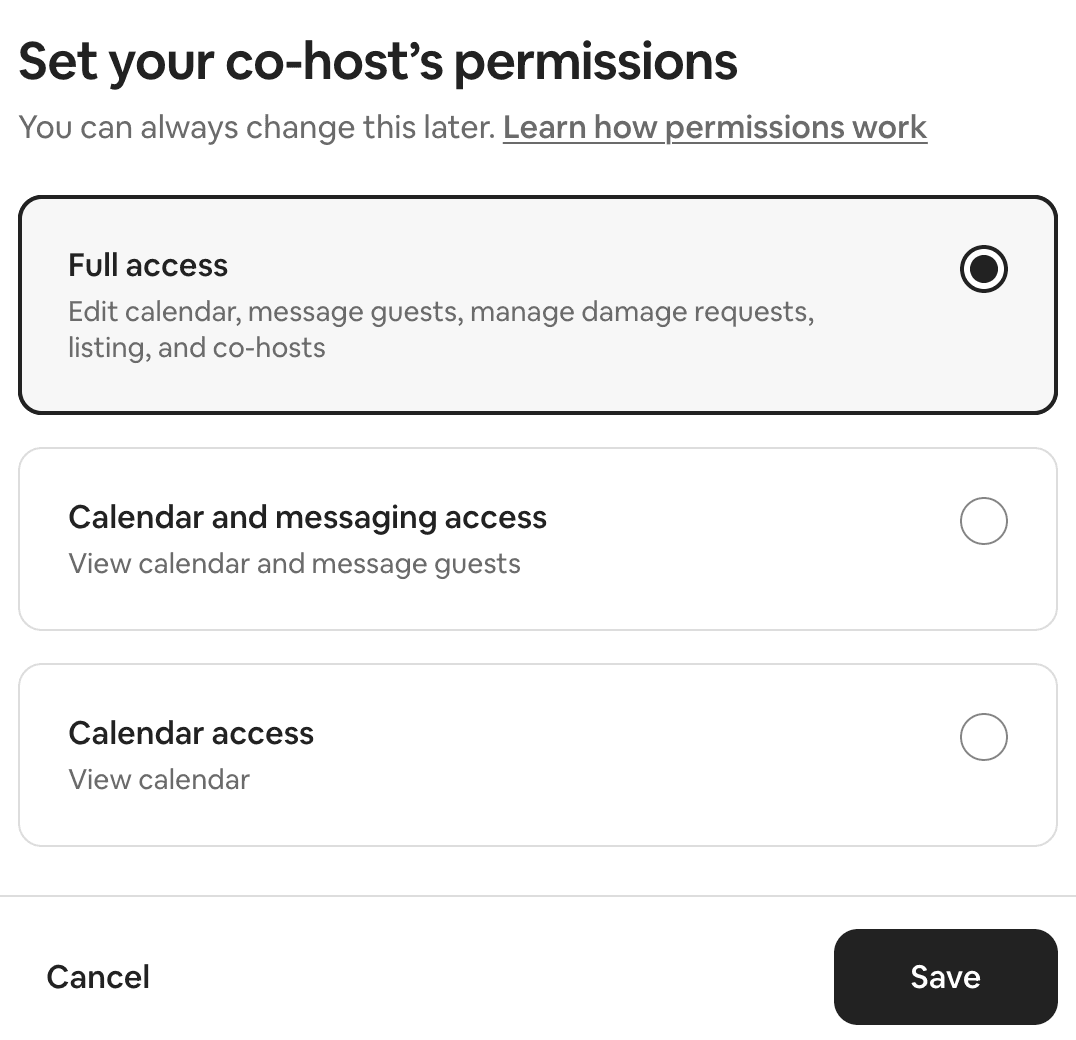
Airbnb built co-hosting directly into the platform. A listing owner adds a co-host through their account settings, sets what the co-host can access — messaging, calendar management, pricing, or all of the above — and assigns a payout percentage. When a booking comes in, Airbnb splits the payout automatically: the owner and co-host each receive their share to their own payout accounts.
The co-host arrangement solves a specific problem: short-term rentals require real-time availability that most property owners don’t have. Guest inquiries come in at night. Check-in issues happen on holidays. A missed message during a peak booking window can mean a declined inquiry becomes a competitor’s booking. A co-host fills that availability gap without the owner having to be on-call.
Co-hosting is distinct from traditional property management. A property manager typically runs dozens of listings under their own business and may not be visible to guests as the point of contact. A co-host operates under the owner’s existing listing and account — guests interact with the profile the owner controls, and the co-host’s involvement is managed at the platform level.
Co-hosting affects the operational metrics Airbnb uses to rank listings — response rate, review consistency, and cancellation rate.
How Airbnb Search Ranking Works →What Co-Hosts Actually Do
Co-host responsibilities vary based on what the owner delegates, but most arrangements fall into two categories: communication-only or full-service management. The distinction matters because it determines both the fee and what the owner is still responsible for day-to-day.
Guest messaging and inquiry handling
Communication-onlyThe most common starting point for a co-hosting arrangement. The co-host monitors and responds to all incoming messages — pre-booking inquiries, mid-stay questions, and post-stay follow-ups. A co-host handling communication can maintain a 90%+ response rate without the owner needing to be available around the clock, which directly supports Superhost eligibility.
Check-in coordination and key management
Full-serviceFor listings without self check-in, a co-host coordinates arrival logistics — providing access instructions, handling delayed arrivals, and managing key handoffs. This is the most time-intensive responsibility and typically commands a higher fee percentage.
Cleaning vendor coordination and turnover oversight
Full-serviceCo-hosts who manage cleaning relationships schedule turnovers between bookings, verify that cleaners meet the listing's standard, and handle last-minute coverage gaps. This responsibility has the most direct impact on cleanliness scores — the sub-rating guests report most often in negative reviews.
Maintenance escalation and issue resolution
Full-serviceWhen guests report a broken appliance, a plumbing issue, or a WiFi outage, a co-host with maintenance access can escalate quickly — calling a contractor, issuing a partial refund through Airbnb, or arranging a replacement. Guest issues resolved within the stay almost never become negative reviews.
Response rate and review consistency are two of the five performance areas Selah tracks in listing audits — a co-host directly influences both.
What Actually Drives Bookings →How Co-Hosting Revenue Splits Work
When you add a co-host on Airbnb, you set a payout percentage for them. Airbnb applies that split automatically to each booking — the co-host is paid from the same transaction, not separately by the owner. The percentage is set per co-host and applies to all bookings unless you update it.
Typical splits vary by scope. Communication-only arrangements usually fall in the 10–15% range. Full-service management — communication, check-in, cleaning oversight, and maintenance — runs 20–30% in most US markets. Some co-hosts, particularly those managing high-volume or multi-property portfolios, prefer a flat monthly fee instead of a percentage. Either model works; the percentage model aligns the co-host’s income with your occupancy, which can be useful when demand is variable.
How the Co-Host Payout Works
- ✓Paid automatically by Airbnb — no manual transfers from the host
- ✓Applies to the net payout after Airbnb's host service fee
- ✓Can be set to 0% for co-hosts who work as team members without taking revenue
- ✓Does not affect what guests pay — the split comes from the host payout only
- ✓Viewable by both parties in the earnings dashboard
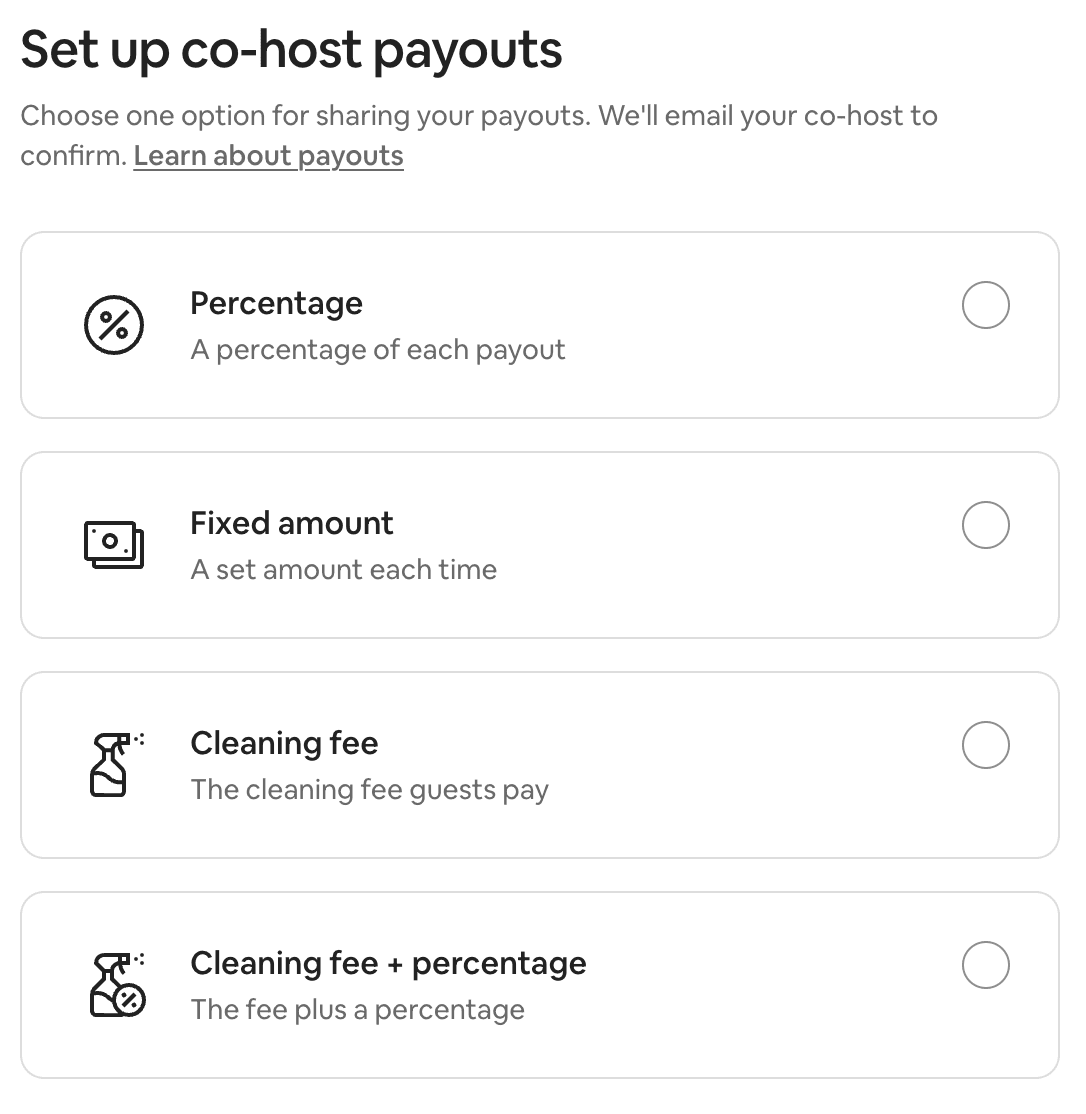
Before agreeing on a split, align on scope in writing. A 20% fee for communication-only is a poor deal for the owner; a 15% fee for full-service management is a poor deal for the co-host. Misaligned expectations on scope are the most common reason co-hosting arrangements break down in the first season.
How to Find and Evaluate a Co-Host
Airbnb has a built-in co-host network, accessible from your hosting dashboard. Co-hosts on the platform list their services, rates, and experience, and show reviews from other hosts they have worked with. This is the lowest-friction starting point for finding a co-host in your area.
Personal referrals from other hosts in your market are a higher-signal option. A co-host who already manages listings in your neighborhood understands the local maintenance vendors, knows the check-in logistics specific to your area, and has established cleaner relationships. A solid reference from a host who has worked with them for at least one full season is worth more than a polished profile.
Ask about their current portfolio
How many listings are they currently co-hosting? A co-host managing 15+ listings solo may not have the availability to respond to your guests within one hour at 10pm. Ask directly about their response window and how they handle simultaneous guest emergencies.
Review their communication style before you commit
Ask them to respond to a sample guest inquiry. The tone, speed, and accuracy of that response is the clearest signal available about how they will represent your listing. A co-host who takes two days to respond to your initial outreach will take two days to respond to your guests.
Check their local maintenance network
If they are managing full-service, they need reliable contacts for plumbing, HVAC, and general repairs in your area. Ask who they call when a hot water heater fails on a Friday night. If they do not have an immediate answer, they do not have the network.
Clarify how they handle negative reviews
Co-hosts who respond to reviews on your behalf should know your house policies and write in a voice consistent with your listing. Review a sample of how they have responded to negative reviews on other listings before giving them that access.
A co-host who maintains Superhost-level response rates and review consistency can directly improve your listing’s standing on the platform.
Airbnb Superhost Guide →How to Become an Airbnb Co-Host
Co-hosting is one of the clearer paths into STR management without owning property. The income model is straightforward — you earn a percentage of bookings you help generate — and the skills transfer directly to running your own listings if you choose to later.
The fastest way to build a co-hosting track record is to start with one or two listings for people you know — a neighbor who travels frequently, a family member with a vacation home, a local host who needs communication coverage. Manage those listings as if they were your own. Document your results: screenshots of response rate metrics, before-and-after review scores, occupancy data across a full booking season.
What Hosts Look for in a Co-Host
- ✓Local presence — ability to handle in-person check-ins or emergency property visits
- ✓Documented response rate from previous co-hosting or hosting experience
- ✓References from at least one host they have worked with for a full season
- ✓Established relationships with local cleaning crews and maintenance contractors
- ✓Clear communication about availability windows and escalation procedures
Once you have a verifiable track record — even from one or two listings — list your services in Airbnb’s co-host network. Your profile should name your market, describe your scope clearly, and state what you charge. Hosts searching for co-hosts prioritize local experience over a detailed profile.
A Selah listing audit gives co-hosts who manage a listing a clear picture of where that listing stands against nearby top earners — and a prioritized action plan for closing the gap.
About This Guide
This guide is written by Selah Collective, a short-term rental consultancy that audits and improves Airbnb listings for hosts. Performance patterns referenced here are based on Selah’s analysis of STR listing data across markets. Revenue and occupancy figures represent observed patterns among comparable listings, not guaranteed outcomes. Selah is not affiliated with Airbnb.
Before You Add a Co-Host, Know Where Your Listing Stands
A co-host can handle operations more reliably — but if the underlying listing has visibility or conversion gaps, those problems follow the co-host into every booking season. The Selah Score™ audit benchmarks your listing across five performance areas against the actual top earners in your market and returns a prioritized action plan.
Frequently Asked Questions
What does an Airbnb co-host do?
A co-host manages the operational side of a listing on behalf of the owner — typically messaging guests, coordinating check-ins, handling maintenance requests, and updating the calendar. Exactly what a co-host covers depends on what the owner delegates. Some co-hosts handle everything from inquiry to review; others cover a narrower scope like communication only.
How much does an Airbnb co-host charge?
Co-host fees vary based on scope. Communication-only co-hosts typically charge 10–15% of the nightly rate. Full-service management — messaging, check-in coordination, cleaning oversight, and maintenance escalation — runs 20–30% in most US markets, based on Selah's analysis of co-hosting arrangements across STR markets. Some co-hosts charge a flat monthly fee instead of a percentage, which makes sense for high-volume listings with predictable occupancy.
How do co-hosts get paid on Airbnb?
Airbnb pays co-hosts directly. When a host adds a co-host and assigns them a payout percentage, Airbnb splits the booking revenue automatically — the host receives their share and the co-host receives theirs via their own Airbnb payout account. There is no manual transfer required from the host.
Can a co-host help you earn Airbnb Superhost status?
Yes. The Superhost criteria — 90%+ response rate, 4.8+ overall rating, fewer than 1% cancellations — are operational metrics that a co-host directly influences. Hosts who delegate communication to a responsive co-host consistently maintain response rates well above the Superhost threshold and catch guest issues before they become negative reviews.
How do I become an Airbnb co-host?
Start by managing one or two listings for someone in your network — a neighbor, a family member, or a local host you know. Build a documented track record: screenshots of response rate metrics, before-and-after review scores, occupancy data. Once you have verifiable results from at least one full season, list your services in Airbnb's co-host network.
Where do I find a co-host for my Airbnb?
Airbnb has a built-in co-host network where you can search by location and read reviews from other hosts. Personal referrals from other hosts in your market are typically the highest-signal option — a co-host with a proven local track record is worth more than one with a strong profile but no nearby experience.
What permissions does an Airbnb co-host have?
Airbnb gives hosts control over what co-hosts can access. Co-hosts can be granted permission to message guests, manage the calendar and pricing, respond to reviews, manage listings, and handle payments. You can restrict access to messaging-only if you want communication coverage without ceding control over pricing or payouts.
Ready to see where your listing stands?
Get a complete audit across all five performance areas — benchmarked against real listings in your market.